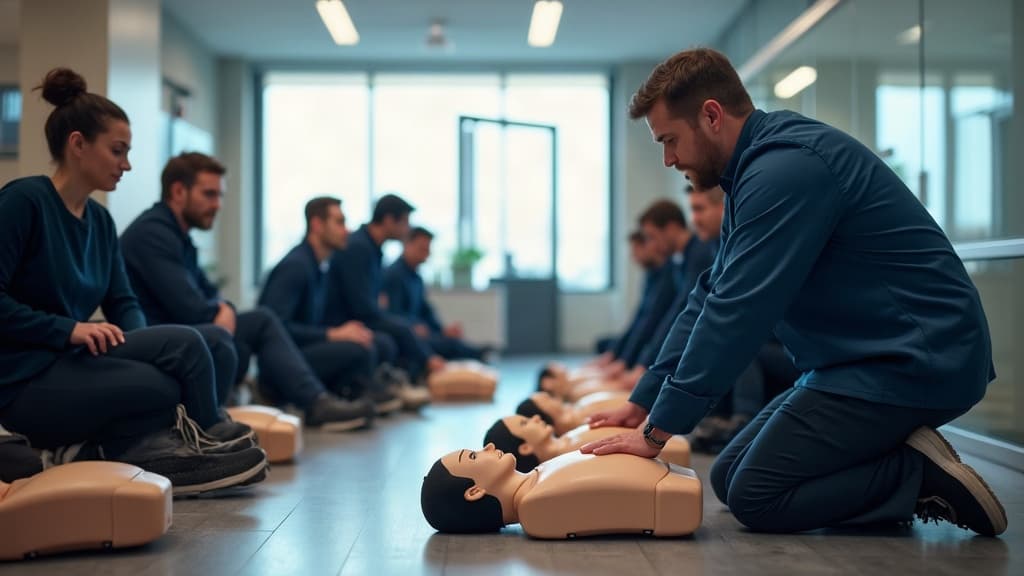
When a medical emergency happens at work, the minutes before professional help arrives can make all the difference. Having employees trained in first aid and AED (automated external defibrillator) use means your team isn't left waiting helplessly — they can act. Beyond the obvious human benefit, workplace first aid certification also supports your broader safety program and may positively affect your standing with Ohio's Bureau of Workers' Compensation (BWC).
What First Aid and AED Certification Covers
First aid and AED training teaches employees to recognize and respond to common workplace medical emergencies. Most certification programs cover:
Cardiopulmonary resuscitation (CPR) for adults, children, and infants
How to recognize cardiac arrest and use an AED correctly
Controlling severe bleeding and treating wounds
Responding to choking, burns, and fractures
Identifying signs of stroke, diabetic emergencies, and allergic reactions
SuretyHR offers certifications and are good for 2 years. Training can often be completed in a single day, either on-site or at an offsite location.
Why It Matters in an Emergency
Cardiac arrest is one of the leading causes of workplace fatality in the United States. In a cardiac arrest situation, every minute without defibrillation reduces the chance of survival significantly. When trained employees can step in immediately with CPR and an AED, outcomes improve dramatically before emergency medical services even arrive.
First aid training also helps with less dramatic but still serious situations — a deep laceration on a job site, a coworker showing signs of a stroke, or an allergic reaction in the break room. Employees who know what to do stay calmer, take appropriate action, and can communicate clearly with 911 dispatchers while help is on the way.
The Business Case for Getting Certified
Investing in first aid and AED training isn't just about doing the right thing — it makes practical business sense for Ohio employers.
Regulatory alignment: OSHA requires employers to ensure prompt first aid is available to employees. Depending on your industry and distance from emergency services, having certified employees on-site may be a compliance requirement.
Reduced incident severity: Quick, competent first response can limit how serious an injury or illness becomes, potentially reducing medical costs and lost-time claims.
Employee confidence: Workers who feel their employer has prepared them for emergencies tend to feel safer and more valued — which supports retention and morale.
Building First Aid Readiness Into Your Safety Program
Getting certified is a good start, but keeping your workplace prepared takes a little ongoing effort. A few practical steps to consider:
Identify how many certified employees you need based on your workforce size, shift schedules, and facility layout
Make sure AEDs are properly placed, maintained, and inspected on a regular schedule
Keep first aid supplies stocked and accessible throughout the workplace
Schedule recertification before credentials expire so you're never without qualified responders on the floor
Treating first aid readiness as a living part of your safety program — not a one-time checkbox — keeps your team genuinely prepared when it counts.
If you're interested in understanding how workplace certifications fit into your overall HR and risk management strategy, or scheduling a training for your employees, the team at Surety HR is here to help. Reach out to us today to start the conversation.
Find out how much you could save.
A SuretyHR consultant will review your HR, payroll, and benefits needs at no cost or obligation.